
Drexel University
Master of Business Administration
AACSB-Accredited MBA with 5 Specializations
Enroll Now
Free consultation — no commitment required.
Supporting your journey with trusted advice on universities and international programs.

Admission Rate
98%
Across all destinations
Avg. Cost Savings
₹20L*
vs. self-managed admissions
300+
Partner Universities
50+
Destinations Covered
98%
Admission Rate
₹20L*
Avg. Cost Savings
*vs. self-managed admissions
Job Opportunities, Top Universities, ROI
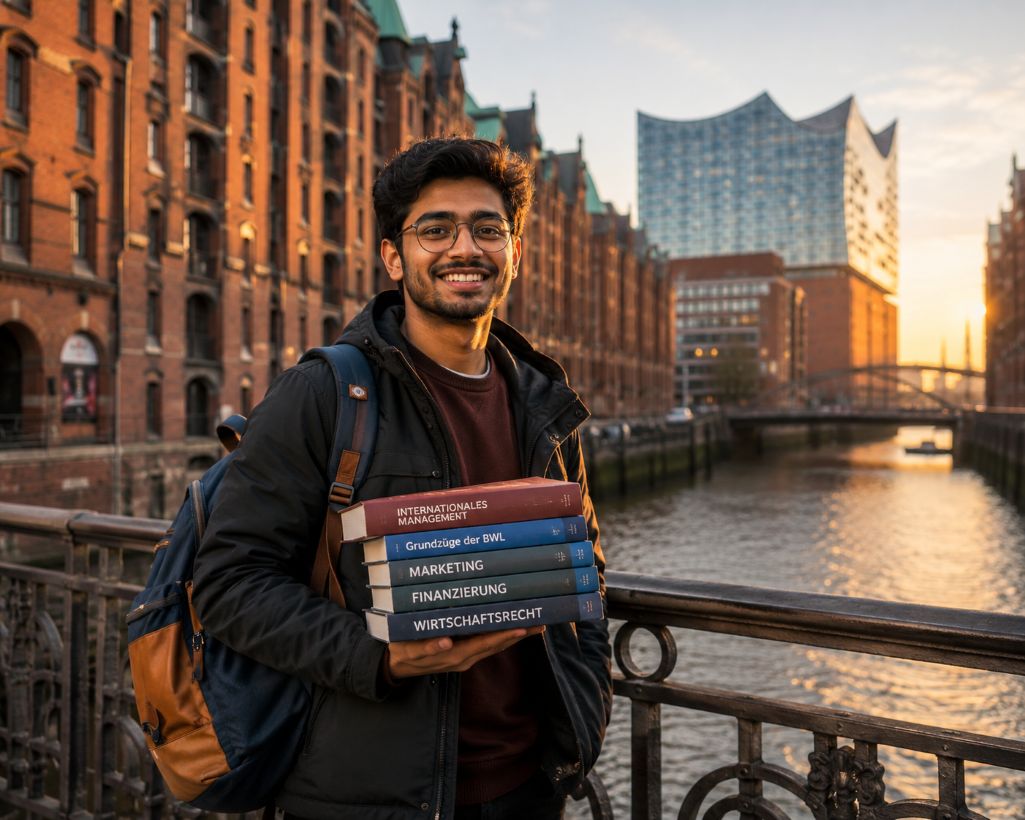
Study in Germany
Explore leading German cities offering career-focused programs
Programs built to help you gain practical skills and grow in the right direction.
Follow these simple steps to start your study abroad journey
Choose the best universities and programs based on your goals.
Prepare and complete required standardized tests.
Submit your application to selected universities.
Complete visa process and prepare for departure.
Everything you need to know before you begin your study abroad journey
To study overseas in Germany, students must have an admission letter from a recognised German university, a valid passport, academic transcripts, and proof of language proficiency (English or German, depending on the program). Indian students are also required to obtain an APS certificate to verify their academic documents. In addition, students must show financial proof through a blocked account and have valid health insurance before applying for a student visa.
The cost of studying overseas in Germany is relatively affordable compared to other countries. Public universities usually do not charge tuition fees, and students only pay a semester contribution of around EUR 250–350 (approximately INR 22,000 – INR 32,000 per semester). Living expenses typically range between EUR 10,000 and EUR 12,000 per year, which is about INR 9 lakh to INR 11 lakh annually.
IELTS or other English proficiency tests are required for English-taught programs in Germany. Most universities accept IELTS, TOEFL, or PTE scores, with typical IELTS requirements ranging between 6.0 and 7.0. However, for German-taught programs, students must provide German language proficiency through tests like TestDaF or DSH.
A blocked account (Sperrkonto) is a mandatory financial requirement for students who want to study overseas in Germany. Students must deposit a fixed amount, currently around EUR 11,000, which is approximately INR 10 lakh to INR 11 lakh, to cover their living expenses for one year. The amount is released monthly in fixed installments, ensuring that students have sufficient funds during their stay.
Yes, international students who study overseas in Germany are allowed to work part-time. Students can work up to 120 full days or 240 half days per year. Part-time jobs typically pay between EUR 10 to EUR 15 per hour, which is around INR 900 to INR 1,300 per hour.
The admission process to study overseas in Germany usually takes several months. Students should ideally start 8–12 months before their intended intake. This timeline includes course selection, document preparation, APS certification, university application, and visa processing.
Germany is particularly known for Engineering, Automotive Technology, Computer Science, Data Science, and Business programs. Students who study overseas in Germany often choose these fields due to strong industry demand and career opportunities. Research-based programs in natural sciences and technology are also highly regarded.
Yes, students who study overseas in Germany can stay back after graduation for up to 18 months to search for a job related to their field of study. Once employed, they can apply for a work permit or EU Blue Card. This pathway allows students to build long-term careers in Germany.
The APS (Academic Evaluation Centre) certificate is required for Indian students applying to German universities. It verifies the authenticity of academic documents before university admission and visa application. Without an APS certificate, students cannot proceed with their application to study overseas in Germany.
Yes, Germany offers a growing number of English-taught programs, especially at the postgraduate level. These programs allow students to study overseas in Germany without needing German language proficiency initially. However, learning basic German is recommended for daily life and better job opportunities.
Studying overseas in Germany is considered a strong investment for long-term career growth, especially in technical and research fields. With low tuition costs (sometimes close to INR 0 for public universities) and manageable living expenses (around INR 9–11 lakh per year), students receive high-quality education with strong industry exposure.

Start your journey to Canada with expert mentors and programs designed for long-term success.
Start your journey today ›Quick Overview
Germany is globally recognized for offering high-quality education combined with exceptional post-graduation career pathways. Studying here allows international students to build an industry-ready skillset while experiencing a rich cultural environment and enjoying affordable living costs.
Here are the key reasons to study in Germany:
1. World-Class Universities
Germany is home to several top-ranked institutions known for rigorous academic standards, cutting-edge facilities, and world-renowned faculty members across engineering, science, and business fields.
2. Low or No Tuition Fees at Public Universities
Most public universities in Germany do not charge tuition fees for international students enrolled in bachelor's and master's degree programs, regardless of their nationality.
3. Strong Focus on Research and Innovation
German institutions work closely with major research centers like Fraunhofer and Max Planck, enabling students to participate in pioneering research and development projects.
4. Excellent Career Opportunities
As Europe's largest economy, Germany offers abundant career options in tech, automotive, healthcare, and engineering industries facing structural talent shortages.
5. Post-Study Work and PR Prospects
Germany provides straightforward post-study pathways, allowing international graduates to stay, gain professional work experience, and eventually apply for permanent residency.
6. High Quality of Life and Student-Friendly Environment
Germany consistently ranks high for public safety, infrastructure, healthcare, and vibrant international communities that welcome students from across the globe.
Choosing the right institution depends on your field of study, research interests, and location preferences. Germany features both research universities (Universitäten) and universities of applied sciences (Fachhochschulen) tailored to different career goals.
Best German Universities for International Students:
| German University | QS World University Ranking 2027 | Approx. Annual Tuition Fee (EUR / INR) |
|---|---|---|
| Technical University of Munich (TUM) | #25 | €4,000–€12,000 (INR 3.68L–11.04L)* |
| Ludwig-Maximilians-Universität München (LMU) | #61 | €0 (Tuition-free) |
| Heidelberg University | #86 | €3,000 (Baden-Württemberg fee; approx. INR 2.76L) |
| Freie Universität Berlin | #98 | €0 (Tuition-free) |
| RWTH Aachen University | #104 | €0 (Tuition-free) |
| Karlsruhe Institute of Technology (KIT) | #110 | €3,000 (Baden-Württemberg fee; approx. INR 2.76L) |
| Humboldt-Universität zu Berlin | #140 | €0 (Tuition-free) |
| Technical University of Berlin (TU Berlin) | #158 | €0 (Tuition-free) |
*Note: TUM charges tuition fees for non-EU international students on select degree programs. Public universities in the state of Baden-Württemberg charge €1,500 (INR 1.65 Lakhs) per semester for non-EU students. Currency conversions are calculated at approx. €1 = INR 92.
German degree programs are designed in sync with current global industry requirements, providing strong theoretical foundations alongside practical, real-world application.
Below are some of the popular courses to study in Germany:
German engineering programs enjoy global prestige, producing skilled graduates in mechanical, civil, structural, and electrical engineering fields.
Computer Science courses prepare students for roles in software architecture, cloud platforms, cybersecurity, and advanced computing technologies.
Business programs offer international exposure, covering corporate finance, global supply chain, marketing strategy, and international leadership.
These cutting-edge programs equip students with statistical modeling, deep learning, data visualization, and machine learning skills.
Designed alongside automotive giants, this specialized track focuses on vehicle dynamics, autonomous systems, mobility design, and powertrain engineering.
Focusing on sustainable energy systems, these programs cover wind/solar technology, environmental policy, and climate science solutions.
Admission requirements vary depending on whether you apply for a bachelor's or master's program, as well as the language of instruction. Meeting basic qualifications is necessary before submitting applications.
Applicants must hold recognized academic qualifications equivalent to the German educational system standards (Abitur or equivalent bachelor's degree).
Depending on whether the course is taught in English, German, or a mix of both, applicants must provide recognized language test scores.
A complete application file must contain verified academic transcripts, personal essays, and identity credentials.
Applying to German universities requires organized planning to meet strict institutional deadlines. Following a systematic process ensures your application is processed without unnecessary delays.
1. Select a Course and University
Research degree modules through official portals like DAAD or university websites to ensure your academic profile matches program requirements.
2. Submit Your Application
Applications are submitted directly via the university's online portal or through the centralized uni-assist evaluation platform.
3. Receive the Admission Letter
Once evaluated, successful candidates receive an official Letter of Acceptance (Zulassungsbescheid), which is mandatory for visa applications.
4. Apply for a German Student Visa
Schedule a student visa appointment at your regional German Embassy or VFS Application Center as soon as you receive admission.
5. Arrange Blocked Account and Health Insurance
Demonstrating financial stability and holding comprehensive health insurance are legal prerequisites for securing a German student visa.
While public universities generally do not charge tuition fees [€0 (Approx. INR 0)], the actual cost of studying in Germany requires budgeting for semester contributions, living costs, and health coverage.
Tuition Fees at Public and Private Universities
Public universities remain mostly tuition-free [€0 (Approx. INR 0)], whereas private institutions set independent tuition rates based on degree specialty.
Tuition Fee Breakdown:
| Institution Type | Average Annual Tuition Fee (EUR) | Approx. Annual Tuition Fee (INR)* |
|---|---|---|
| Public Universities (Most States) | €0 / year | INR 0 |
| Public Universities (Baden-Württemberg) | €3,000 / year (€1,500 / semester) | INR 2.76 Lakhs / year (INR 1.38 Lakhs / semester) |
| Private Universities | €10,000 – €22,000 / year | INR 9.20 Lakhs – INR 20.24 Lakhs / year |
*Note: Currency conversions are calculated at an approximate rate of €1 = INR 92.
Monthly living expenses vary across German cities. According to official student financial estimates, students need approximately €950 to €1,200 monthly (Approx. INR 87,400 to INR 1,10,400 per month) to cover rent, food, transport, and utilities.
Average Annual Expenses to Study Overseas in Germany:
| Expense Category | Average Annual Cost (EUR) | Approx. Cost (INR) |
|---|---|---|
| Tuition Fee (Public Universities) | €0 – €3,000 | INR 0 – INR 2.76 Lakhs |
| Blocked Account Deposit (Living Costs) | €11,904 | INR 10.95 Lakhs |
| Health Insurance | €1,440 | INR 1.32 Lakhs |
| Semester Contributions | €600 | INR 55,200 |
| Total Estimated Annual Expenses | €13,944 – €16,944 | INR 12.82 Lakhs – INR 15.58 Lakhs |
Studying in Germany is already budget-friendly thanks to low tuition fees, but scholarships make it even easier on your wallet. From government-funded grants to private foundation stipends, international students have plenty of options to help cover living costs and study materials.
Popular Scholarships in Germany:
| Scholarship Name | Target Audience & Eligibility | Coverage / Financial Allowance (EUR & Approx. INR)* |
|---|---|---|
| DAAD Master's Scholarships | High-achieving international students applying for Master's programs across all disciplines. | €992 / month (Approx. INR 91,264 / month) plus travel grants and health insurance. |
| Deutschlandstipendium | Top-performing students of any nationality enrolled at participating German universities. | €300 / month (Approx. INR 27,600 / month) awarded for at least two semesters. |
| Heinrich Böll Foundation Grants | International students with strong academic records and active social or political commitment. | €934 / month (Approx. INR 85,928 / month) plus individual family and travel allowances. |
| Konrad-Adenauer-Stiftung (KAS) | Postgraduates with a strong academic background and keen interest in political or civic engagement. | €934 / month (Approx. INR 85,928 / month) along with tuition support for select private courses. |
| Friedrich Ebert Foundation | Talent from developing countries demonstrating civic involvement and academic excellence. | €934 / month (Approx. INR 85,928 / month) plus health insurance cover. |
| Erasmus+ Mobility Grant | Students participating in exchange or mobility semesters within partner European institutions. | €300 – €600 / month (Approx. INR 27,600 – INR 55,200 / month) based on the destination. |
*Note: Currency conversions are calculated at an exchange rate of €1 = Approx. INR 92.
International students from outside the EU/EEA must obtain a National Student Visa (Category D) before entering Germany for long-term academic study.
To qualify for a student visa, you must hold an unconditional or conditional admission letter from a recognized German university.
The German federal government sets a standardized minimum amount required in a Blocked Account (Sperrkonto) to ensure students can support themselves.
Indian applicants must complete verification through the Academic Evaluation Centre (APS India) located at the German Embassy in New Delhi.
Student visa processing usually takes between 4 to 8 weeks after submitting your application and attending your embassy interview.
Germany provides flexible work rules allowing international students to support themselves financially while gaining valuable practical workplace experience.
Part-Time Work Rules:
International non-EU students are legally permitted to work part-time alongside their full-time degree programs.
Student Internships:
Mandatory internships (Pflichtpraktikum) integrated into university curriculum schedules do not count against your annual 140-day work limit.
Working Student (Werkstudent) Opportunities:
Taking a Werkstudent role allows students to work up to 20 hours per week in a field directly aligned with their major studies.
Germany's strong industrial base offers international graduates excellent career entry pathways and competitive initial compensation.
Average Salary by Professionals:
| Profession / Job Role | Average Starting Salary (EUR) | Approx. Annual Salary (INR)* |
|---|---|---|
| Software Engineer | €55,000 – €75,000 | INR 51.15 Lakhs – INR 69.75 Lakhs |
| Automotive Engineer | €57,000 – €75,000 | INR 53.01 Lakhs – INR 69.75 Lakhs |
| Data Analyst / AI Specialist | €50,000 – €72,000 | INR 46.50 Lakhs – INR 66.96 Lakhs |
| Supply Chain Manager | €48,000 – €65,000 | INR 44.64 Lakhs – INR 60.45 Lakhs |
| Business Analyst / Project Manager | €52,000 – €67,000 | INR 48.36 Lakhs – INR 62.31 Lakhs |
*Note: Currency conversion calculated at 1 EUR ≈ ₹93 INR.
Source: Glassdoor & Industry Data
High-Demand Industries:
Key sectors experiencing worker shortages actively hire qualified international degree holders.
Post-Study Work Visa:
After graduating, international students can apply for an 18-month residence permit to look for a job related to their degree qualifications.
Study Overseas in Germany has become one of the strongest long-term investments for international students, not simply because of its tuition-friendly public universities, but because it combines academic excellence with real career opportunities. Germany's close collaboration between universities and industry, practical learning approach, and demand for skilled professionals create genuine value beyond graduation.
From my perspective, the students who benefit the most from Study Overseas in Germany are those who plan strategically rather than focusing only on low tuition fees. Choosing the right programme, understanding APS and visa requirements, and aligning your studies with Germany's labour market can make a significant difference to your career outcomes.
If your goal is to earn a globally recognised degree while building a career in one of Europe's strongest economies, Germany remains one of the most rewarding destinations for higher education.
Health insurance is mandatory for all international students in Germany. Students under 30 usually enroll in a public health insurance plan, while those over 30 may need private health insurance or voluntary public coverage. Proof of valid health insurance is required before obtaining a student visa and completing university enrollment.
After graduation, international students can generally stay in Germany for up to 18 months to search for a job related to their qualification. During this period, they can work without the restrictions that apply to student employment. Once they secure an eligible job, they can apply for a work permit or an EU Blue Card.
Universities in Germany focus on academic research, theoretical knowledge, and doctoral studies. Fachhochschulen (Universities of Applied Sciences) emphasize practical learning, industry collaboration, and internships. Both offer recognized degrees, so the choice depends on your career goals and preferred learning style.
Basic German is not always required, especially for English-speaking jobs in major cities or international companies. However, having German language skills significantly improves your chances of finding part-time work in retail, hospitality, customer service, and other public-facing roles while also making daily life easier.
Students should begin the visa process at least 4 to 6 months before their course starts. This allows enough time to obtain an APS Certificate (if applicable), arrange a blocked account, collect required documents, and secure a visa appointment, especially during peak admission seasons.
Yes, eligible international students can apply for family reunification visas for their spouse and dependent children. Applicants must demonstrate sufficient financial resources, suitable accommodation, and health insurance coverage. Processing times can vary, so early planning is recommended.
International graduates who secure qualified employment may become eligible for Permanent Residency after meeting the required residence, employment, and language requirements. Graduates working under an EU Blue Card may qualify faster if they satisfy the applicable eligibility criteria.
A Studienkolleg is a one-year preparatory program for students whose school qualifications are not considered equivalent to the German university entrance qualification. Students complete subject-specific coursework and pass a final assessment before becoming eligible to enroll in a German university.
Students should apply for university-managed accommodation as soon as they receive an admission offer. They can also explore shared apartments, private rentals, and student housing platforms. Beginning the search early improves the chances of securing affordable accommodation in popular cities.
Most DAAD scholarships are intended for master's and doctoral students. However, undergraduate students may still qualify for university-specific scholarships, merit-based awards such as the Deutschlandstipendium, and other funding opportunities offered by foundations and institutions.
Yes, under certain conditions, students may switch from a student visa to a work visa if they receive a qualifying job offer and meet immigration requirements. However, many students prefer to complete their degree first to benefit from Germany's post- study work opportunities and improve their long-term career prospects.

